Stop Hand-Washing Dishes: Get Your Dishwasher Back
When your dishwasher stops drying or cleaning, it throws off your whole kitchen routine. You open the door, and instead of clean, dry dishes, you see cloudy glasses, wet plates, and bits of food still stuck on. It is frustrating, especially when you are already busy.
Modern dishwashers are simple to use, but inside they depend on several parts working together. Heat, water pressure, filters, and detergent all have a job. If one gets blocked, worn, or coated in mineral buildup, the whole cycle can suffer.
In this guide, we will go through hidden causes that many Alpharetta and North Georgia homeowners run into, such as hard water buildup, clogged filters, and failing heaters. We will also share basic checks you can do at home and signs that it is time to call for professional dishwasher repair in Alpharetta.
Why Your Dishwasher Suddenly Stops Cleaning Well
Most dishwashers do not fail overnight. Cleaning and drying usually get worse little by little. A bit of food in the filter, some soap film on the inside, or light mineral buildup in the spray arms can slowly cut water flow and cleaning power. Before you know it, your normal cycle is not doing the job it used to.
Common signs your dishwasher is struggling include:
- Food stuck to plates and bowls after a full cycle
- Cloudy glasses that look foggy or etched
- Greasy film on plastic containers or silverware
- Detergent pod not fully dissolved at the end
- Bad smells when you open the door
- Water sitting in the bottom of the tub
In Alpharetta and nearby North Georgia communities, harder water and frequent use can speed this up. Large family loads, back-to-back cycles, and heavier use during summer often mean more food, more soap, and more minerals moving through the same small openings and filters. When parts start to clog, your dishwasher simply cannot move water like it should.
Hard Water and Detergent Issues Many Owners Miss
Hard water is water with a higher level of minerals, mainly calcium and magnesium. These minerals leave a white, chalky coating when the water dries. Inside a dishwasher, that coating can collect on spray arms, the heating element, and the inner walls.
Over time, hard water can lead to:
- White spots and streaks on glasses
- Cloudy film on dishes that does not rinse off
- Poor drying, because water clings to mineral-coated surfaces
- Reduced water flow from partially clogged spray arm holes
You can do a few easy checks:
- Look at your spray arms and heating element. Do you see a white, crusty buildup?
- Check clear glasses right out of the dishwasher. Do they look hazy instead of clear?
- Feel plates after a cycle. Do they feel rough or chalky instead of smooth?
If you notice these signs, try some simple steps:
- Use a rinse aid with every cycle to help water sheet off dishes for better drying
- Choose detergents labeled for hard water and use the right amount for your load size
- Run a cleaner or a dishwasher-cleaning cycle regularly to help reduce buildup
- Gently clean spray arm holes using a soft brush or toothpick, without forcing anything
When mineral buildup is heavy, it can get inside parts you cannot easily see or reach. In those cases, proper descaling often needs professional tools and know-how. That is when a local expert in dishwasher repair in Alpharetta can help restore normal performance.
Clogged Filters, Spray Arms, and Drains Blocking Results
Modern dishwashers use less water than older ones. That is good for the utility bill, but it also means they rely more on clean filters and strong water flow to do the same job. Even small scraps of food, paper labels from jars, or broken glass can block filters and spray arm openings.
When this happens, you might notice:
- Weak spray or an odd spray pattern inside
- Food stuck in the same spots on dishes every time
- Grit or chunks at the bottom of cups or bowls
- Standing water that drains slowly or not at all
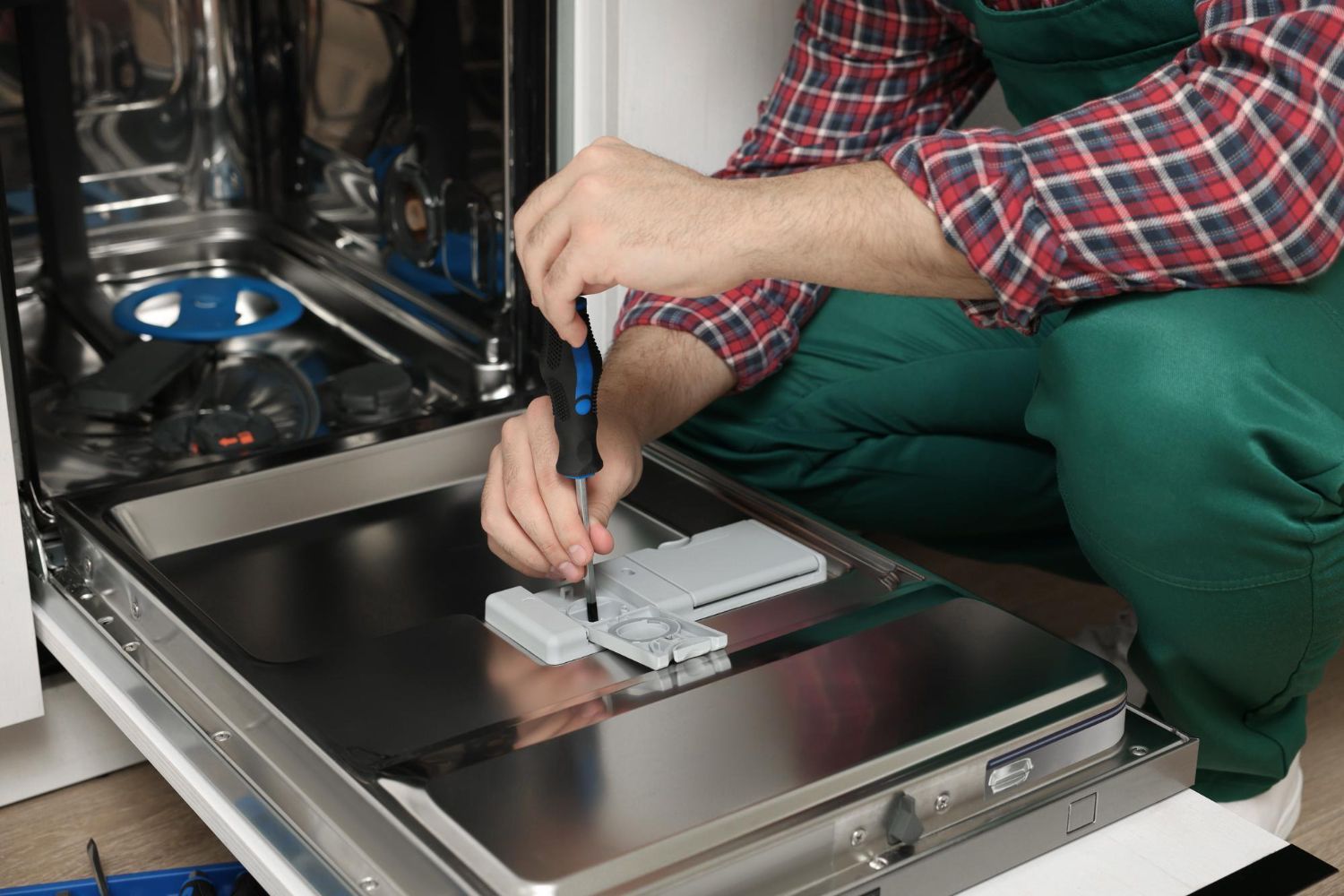
Most homeowners can safely handle some simple cleaning:
- Remove the lower rack and twist out the main filter, if your model has one, then rinse it under warm running water
- Check the coarse screen or secondary filter nearby and clear larger debris
- Inspect spray arm holes for clogs and gently clear them
- Look around the drain area for obvious items like glass, labels, or large food pieces
Be gentle and avoid forcing parts that do not easily come off by hand. If you notice any of these red flags, it is better to stop and get help:
- Filters or spray arms keep clogging again right after you clean them
- Standing water remains at the bottom after each cycle
- The dishwasher shows error codes or stops in the middle of a cycle
- You hear grinding, humming, or buzzing sounds that were not there before
Those can be signs of pump or drain problems that need professional service, not home fixes.
Failing Heater and Sensors That Stop Proper Drying
Your dishwasher depends on the right water temperature for both washing and drying. Hot water helps your detergent break down grease and stuck-on food. At the end of the cycle, a heater or a high-temperature rinse, along with sensors and fans, helps water evaporate so your dishes come out dry.
When the heater or temperature sensors have trouble, you may notice:
- Dishes feel cold at the end of the cycle instead of warm
- Plastic items come out very wet while glass is only slightly damp
- Cycles run much longer than they used to as the dishwasher keeps trying to reach the right heat
- Error codes or lights linked to heating or drying
- A breaker that trips when the cycle reaches the heated part
Heating elements, wiring, and control boards involve high temperatures and electricity inside a wet appliance. This is not an area for DIY experiments. Trying to fix or test heating parts without the right tools and training can create safety risks and further damage. For these problems, calling a local technician for dishwasher repair in Alpharetta is usually the safest and most reliable path.
When to Call a Local Pro and Keep Your Dishwasher Lasting
A little at-home care goes a long way, but it does not replace expert service. Homeowners can usually handle:
- Regularly rinsing and reinstalling removable filters
- Clearing debris from spray arms and the drain area that can be easily reached
- Using the right detergent and rinse aid for local water conditions
- Running cleaning cycles to help control odors and light buildup
On the other hand, it is time to bring in a professional when:
- Problems keep coming back even after you clean filters and spray arms
- You notice leaks on the floor, water under the machine, or moisture around cabinets
- There are burning smells, smoke, or melted plastic inside
- The breaker trips, or you suspect an electrical or heating issue
- The dishwasher is older and now has frequent or different issues cycle after cycle
A trained appliance technician can test components, read fault codes, and safely reach hidden parts that homeowners should not open. For families in Alpharetta, Cumming, Roswell, Johns Creek, Milton, and surrounding North Georgia areas, our team at Around the House Appliance Repair works with the local water conditions and common brands found in nearby homes.
With the right mix of simple cleaning and timely professional service, your dishwasher can get back to spraying hard, rinsing clean, and drying well. That means fewer hours at the sink, cleaner dishes on the table, and a kitchen that runs the way it should.
Get Fast, Reliable Dishwasher Repair You Can Trust
If your dishwasher is leaving dishes dirty or not running at all, Around The House Appliance Repair is ready to help. Schedule expert
dishwasher repair in Alpharetta so you can get your kitchen routine back on track quickly. We will diagnose the issue, explain your options, and complete the work with clear communication from start to finish. To book service or ask a question, just
contact us today.